
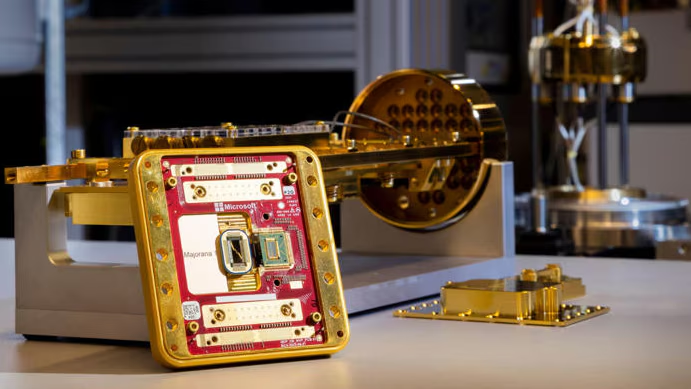
Quantum computing is an emerging technology that promises to revolutionize many aspects of our daily lives and industries by solving complex problems far beyond the reach of classical computers. Unlike traditional computers that use bits to represent data as 0s or 1s, quantum computers use quantum bits or qubits, which can exist in multiple states simultaneously thanks to principles of quantum mechanics. This unique ability enables quantum computers to perform certain calculations exponentially faster, opening up new possibilities for innovation.
In this article, we explore how quantum computing works and the ways it is beginning to impact our lives and the future.
What Is Quantum Computing?
Quantum computing is a field of computing focused on developing technology based on the principles of quantum theory. Quantum theory describes the behavior of energy and matter at the smallest scales — atoms and subatomic particles. Quantum computers leverage two key phenomena:
- Superposition: Qubits can represent both 0 and 1 at the same time, unlike classical bits which are either 0 or 1.
- Entanglement: Qubits can be linked so that the state of one instantly influences the state of another, no matter the distance between them.
These properties allow quantum computers to process a vast number of possibilities simultaneously.
How Quantum Computing Works
Quantum computers manipulate qubits through quantum gates to perform calculations. Because qubits can be in multiple states at once, quantum algorithms can explore many possible solutions in parallel. Instead of following a linear step-by-step approach like classical computers, quantum computers use probabilistic approaches to zero in on the most likely correct answer.
Programming quantum computers requires specialized algorithms, such as Shor’s algorithm for factoring large numbers and Grover’s algorithm for searching unsorted databases efficiently. These algorithms have profound implications in fields like cryptography, optimization, and material science.
Applications of Quantum Computing in Our Lives
Cryptography and Data Security
One of the most discussed impacts of quantum computing is on encryption. Quantum computers could break many of today’s common cryptographic codes, which secure everything from online banking to private communications. At the same time, quantum cryptography techniques can create theoretically unbreakable encryption, enhancing cybersecurity in the future.
Drug Discovery and Healthcare
Quantum computing can simulate molecular interactions at the quantum level, helping researchers discover new drugs and materials more quickly and accurately. This capability could accelerate the development of personalized medicine, improve disease modeling, and create innovative treatments.
Financial Services and Optimization
Financial institutions use quantum algorithms to optimize portfolios, manage risk, and detect fraud. Quantum computing can analyze massive datasets and complex models faster than classical methods, enabling better investment decisions and fraud prevention.
Artificial Intelligence and Machine Learning
Quantum computing can enhance AI by speeding up data processing and improving optimization of complex models. This acceleration may lead to more advanced AI applications in voice recognition, autonomous vehicles, and natural language processing.
Climate Modeling and Environmental Science
Accurate climate models require processing vast amounts of data and complex simulations. Quantum computing could improve these models, leading to better predictions and strategies for tackling climate change and environmental challenges.
Current Limitations and Challenges
Quantum computing is still in its infancy and faces several obstacles before widespread practical use:
- Qubit Stability: Maintaining qubits in their quantum states (coherence) is difficult due to environmental interference.
- Error Rates: Quantum operations are prone to errors that must be corrected through complex error correction codes.
- Hardware Complexity: Building scalable quantum computers with many qubits is technologically challenging and expensive.
- Algorithm Development: Many quantum algorithms are still theoretical or require refinement for real-world use.
Despite these hurdles, ongoing research and investment are rapidly advancing the field.
How Quantum Computing Will Shape Our Future
As quantum technology matures, it will become integrated into various sectors, complementing classical computing rather than replacing it. Businesses, governments, and researchers are already preparing for the “quantum era” by developing hybrid systems that combine quantum and classical computers to solve specialized problems efficiently.
Quantum computing has the potential to transform industries by unlocking new scientific discoveries, enhancing security, and enabling smarter decision-making. Over time, quantum-powered applications could become part of everyday technology, from more secure communications to personalized healthcare and smarter urban planning.
Conclusion
Quantum computing represents a fundamental leap forward in our ability to process information and solve complex problems. By harnessing the unique properties of quantum mechanics, quantum computers open new frontiers in cryptography, medicine, finance, artificial intelligence, and environmental science. While still early in development, quantum computing is already shaping the future and will increasingly impact our lives in profound ways.
If you want, I can also explain basic quantum computing concepts or how to get started learning about quantum programming.