
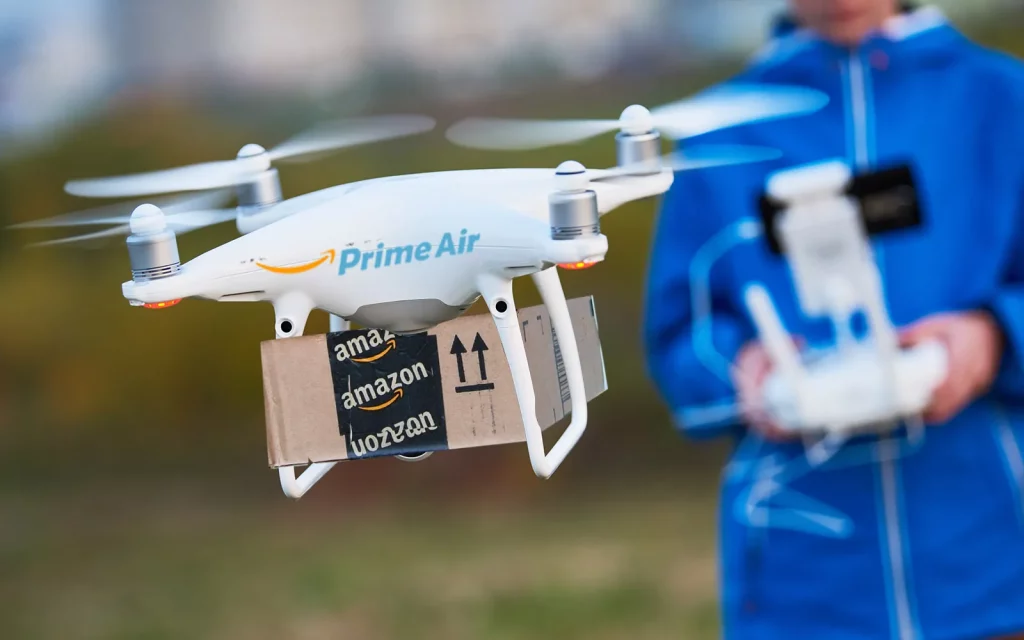
Drone food delivery is rapidly emerging as one of the most exciting applications of advanced artificial intelligence (AI) technology. By combining the speed and flexibility of drones with the intelligence of AI, companies aim to revolutionize how food is delivered—making it faster, more efficient, and safer than traditional delivery methods. This article explores how advanced AI powers drone food delivery, the key technologies involved, the benefits, and the challenges facing this innovative industry.
How AI Enhances Drone Food Delivery
AI transforms drone food delivery from simple remote-controlled flights into fully autonomous systems capable of handling complex real-world scenarios. Advanced AI enables drones to plan optimal routes, avoid obstacles, maintain food safety, and coordinate with other delivery units, all while adapting in real-time to changing conditions.
Key AI Technologies Used in Drone Food Delivery
Intelligent Route Planning
One of the most critical challenges in drone delivery is finding the fastest and safest path from the restaurant to the customer. AI algorithms analyze numerous variables—such as weather conditions, air traffic, geographic obstacles, no-fly zones, and delivery urgency—to calculate the most efficient flight path. These algorithms use machine learning models to improve routing over time based on historical data and real-time inputs.
Computer Vision and Obstacle Avoidance
Drones equipped with cameras and LiDAR sensors use computer vision powered by AI to perceive their surroundings. This allows them to detect and avoid obstacles such as trees, buildings, birds, and other drones during flight. Real-time image recognition and depth sensing ensure safe navigation even in complex urban environments. AI models trained on vast datasets enable drones to accurately identify hazards and respond dynamically.
Autonomous Flight Control and Navigation
Advanced AI enables drones to autonomously take off, fly, hover, and land without human intervention. Reinforcement learning techniques allow drones to improve their flight stability and control in varying wind or weather conditions. AI-powered navigation systems ensure precise location tracking and smooth delivery, even when GPS signals are weak or disrupted.
Package Handling and Delivery Precision
Delivering food safely requires careful handling and precise drop-off. AI-guided drones use sensors to monitor the package’s condition, ensuring it remains secure and at proper temperatures during transit. For delivery, drones can use computer vision to recognize landing zones, verify the customer’s location, or even interact with smart locks or delivery boxes. Some systems integrate facial recognition or QR code scanning to confirm the recipient’s identity.
Fleet Coordination and Management
In large-scale operations, AI manages fleets of delivery drones, optimizing the allocation of orders and coordinating flight schedules to avoid collisions and minimize delays. Multi-agent AI systems enable drones to communicate and work together efficiently, balancing workload and maximizing delivery throughput.
Benefits of AI-Powered Drone Food Delivery
- Faster Delivery Times: AI optimizes routes and flight control, reducing delivery times compared to traditional methods hindered by traffic and road conditions.
- Cost Efficiency: Automation cuts down labor costs and vehicle expenses, making deliveries cheaper in the long run.
- Enhanced Food Safety: Sensors and AI monitoring maintain temperature and prevent contamination, preserving food quality.
- Reduced Carbon Footprint: Electric drones produce less pollution than conventional vehicles, contributing to greener urban logistics.
- Accessibility: Drones can reach remote or traffic-congested areas where traditional delivery is slow or impossible.
Challenges and Considerations
Despite its promise, AI drone food delivery faces several challenges:
- Regulatory Hurdles: Airspace regulations, privacy concerns, and safety standards vary by region and can limit drone operation.
- Battery Life and Payload Limits: Current drone batteries restrict flight range and the weight they can carry, impacting delivery capacity.
- Weather Dependency: Rain, wind, and extreme temperatures affect drone stability and sensor performance.
- Security Risks: Protecting drones and delivery data from hacking or interference is crucial.
- Customer Acceptance: Building trust in drone delivery reliability and safety requires public education and experience.
The Future of AI in Drone Food Delivery
Ongoing advancements in AI algorithms, battery technology, and sensor miniaturization promise to overcome current limitations. Integration with smart city infrastructure and 5G connectivity will enhance real-time data sharing and control. AI-powered drones are expected to become faster, safer, and more reliable, enabling widespread adoption of drone food delivery services globally.
Partnerships between restaurants, tech companies, and regulators will play a key role in shaping standards and ensuring ethical, efficient deployment. The combination of AI and drone technology has the potential to transform the food delivery landscape, making it more responsive, sustainable, and customer-centric.
Conclusion
Advanced AI technology is the driving force behind the rapid growth of drone food delivery. Through intelligent route planning, real-time obstacle avoidance, autonomous navigation, and fleet management, AI empowers drones to deliver food quickly and safely while overcoming many challenges of urban logistics. While hurdles remain, the future looks promising for AI-powered drones to redefine food delivery and provide enhanced convenience and efficiency for consumers worldwide.