
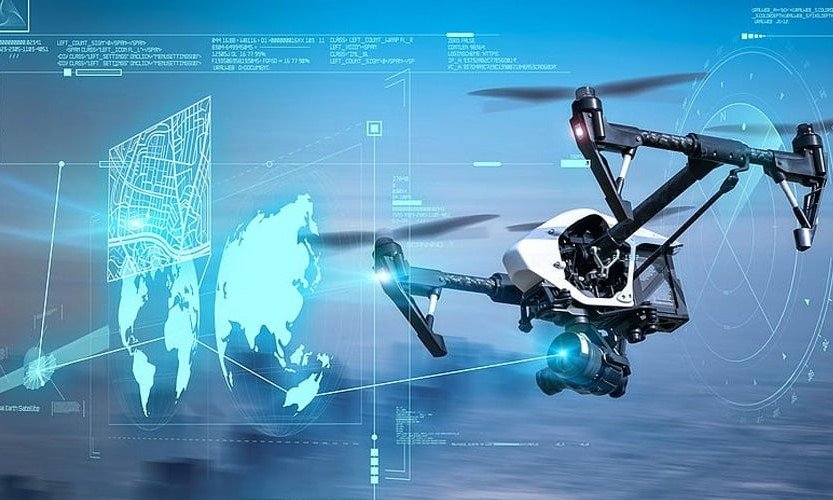
Artificial intelligence (AI) has revolutionized many fields, and drone technology is no exception. AI-powered drones combine advanced hardware, sensors, and intelligent algorithms to operate autonomously or semi-autonomously. These drones can perceive their environment, make decisions, and perform complex tasks with minimal human intervention. In this article, we explore the core components of AI drone technology, how these elements work together, and the benefits and challenges associated with this cutting-edge field.
Core Components of AI Drone Technology
Sensors and Hardware
The foundation of any AI drone is its hardware and sensor suite. These components provide the data that AI systems use to understand the environment and control flight. Common sensors include cameras for capturing images and video, LiDAR (Light Detection and Ranging) for creating detailed 3D maps, GPS modules for location tracking, inertial measurement units (IMUs) to measure acceleration and orientation, and ultrasonic sensors for detecting nearby obstacles. Together, these sensors feed the drone continuous, real-time information about its surroundings and status.
Onboard Computing and AI Algorithms
AI drones rely on onboard computers to process sensor data and execute intelligent decision-making. The heart of this processing involves several key AI techniques. Computer vision algorithms interpret images and videos, enabling the drone to recognize objects such as people, vehicles, or terrain features. Deep learning models, often neural networks trained on vast datasets, improve the drone’s ability to classify objects and understand complex environments. Navigation and path-planning algorithms calculate the most efficient and safe routes, while reinforcement learning allows drones to learn and optimize their behavior over time based on experience. Simultaneous Localization and Mapping (SLAM) algorithms help drones build maps of unfamiliar environments while determining their own location within those maps.
Communication Systems
AI drones often communicate with ground control stations, other drones, or cloud-based servers to share data and receive instructions. This connectivity enables coordinated missions involving multiple drones, remote monitoring, and real-time updates to AI models based on collected data. Secure communication protocols are essential to prevent unauthorized access or interference.
How AI Drones Operate
The operation of an AI-powered drone follows a continuous cycle of sensing, processing, decision-making, and acting. First, the drone’s sensors collect data about the environment, including images, distances to objects, and geographic coordinates. This raw data is processed by onboard AI algorithms to identify obstacles, map the terrain, and recognize specific objects relevant to the mission.
Based on this understanding, the drone’s decision-making system plans a path, chooses maneuvers to avoid obstacles, and determines actions to fulfill its tasks, such as delivering a package or conducting an inspection. These commands are translated into precise motor controls that adjust the drone’s speed, altitude, and direction.
AI drones also learn and adapt during missions. They use feedback from sensors and outcomes of actions to improve future performance, enhancing safety, efficiency, and effectiveness.
Applications of AI Drone Technology
AI drones are being used across various industries to improve efficiency and safety. In agriculture, drones monitor crop health, optimize irrigation, and apply fertilizers or pesticides precisely. Delivery companies are experimenting with autonomous drones to transport packages quickly and cost-effectively. Security and surveillance organizations use AI drones to patrol borders, monitor large crowds, and inspect infrastructure. During natural disasters, drones assist in search and rescue operations, damage assessment, and delivery of emergency supplies. Construction and energy sectors deploy drones for site surveying and inspecting critical infrastructure such as bridges and power lines. Environmental groups utilize drones for wildlife tracking, deforestation monitoring, and pollution measurement.
Benefits of AI in Drone Technology
AI integration significantly enhances drone capabilities. Autonomous operation reduces the need for skilled pilots and allows drones to perform tasks in hazardous or hard-to-reach locations. Real-time obstacle detection and avoidance improve flight safety, reducing crashes and equipment loss. AI optimizes flight paths, saving time and energy. Advanced sensors and intelligent data processing provide highly accurate mapping and analysis. Additionally, swarms of AI drones can collaborate on large or complex missions, increasing scalability and efficiency.
Challenges and Future Prospects
Despite the advances, AI drones face challenges. Battery life remains a limiting factor, restricting flight duration and range. Balancing powerful AI algorithms with the lightweight hardware needed for drones is an ongoing technical challenge. Regulatory frameworks governing drone use and airspace management are still evolving, affecting widespread adoption. Environmental conditions such as rain, fog, or strong winds can degrade sensor performance and flight stability. Security risks, including hacking and unauthorized control, require robust cybersecurity measures.
Looking forward, improvements in battery technology, AI model efficiency, sensor miniaturization, and clearer regulations will expand AI drone capabilities. Enhanced collaboration between drones and integration with other technologies such as 5G and edge computing will unlock new applications.
Conclusion
AI drone technology is transforming how drones operate, enabling them to perform intelligent, autonomous tasks that were once impossible or too risky. By combining advanced sensors, onboard AI processing, and communication systems, these drones can perceive their surroundings, make informed decisions, and adapt to dynamic environments. The result is a versatile tool with applications across agriculture, logistics, security, disaster response, and more. Although challenges remain, ongoing innovation promises a future where AI drones play an integral role in many aspects of daily life and industry.